

The model context protocol, AI, and why the best setup reads straight from your ERP
Picture the third day of close. The lease liability roll-forward that used to eat an afternoon is already on your screen. You asked your AI assistant a plain question, something like "walk me through the change in the right-of-use asset balance since last quarter," and it answered in seconds. Every figure traces back to the exact schedule your lease accounting tool posted in NetSuite. You spot-check two lines against the ledger, they tie out, and you move on. Work that used to take hours is now complete in minutes.
That is what a well-built AI setup delivers in accounting. The cost and time savings are real, and the numbers hold up because the assistant reads straight from your system of record. Getting there takes deliberate work. Luckily, that process has been made easier thanks to the Model Context Protocol (MCP), the connective tissue that makes this all possible.
What MCP actually is, in plain terms
MCP is an open standard for connecting AI assistants to the tools and data they need to do the right work. Anthropic released it in November 2024. By late 2025 the software development kits behind it had passed 97 million monthly downloads, with more than 10,000 active servers.
The idea is simple. Before MCP, every AI-to-tool connection had to be custom-built, a one-off integration for each pairing. MCP replaces that with a common interface, the way USB-C replaced a drawer full of proprietary cables. An assistant that speaks MCP can connect to any system that also speaks MCP.
For accountants, that means the AI you use for research and analysis can be wired directly to the systems where your real numbers live. That direct line to the ledger is what turns a general-purpose assistant into one that can save your team hours.
Audit-ready AI is where the payoff shows up
In KPMG's December 2024 survey of finance leaders, 52% of US companies were using AI specifically in financial reporting and 76% in accounting, and 92% reported their AI initiatives were meeting or exceeding ROI expectations. A year later, KPMG's 2026 global report found active AI use among finance and accounting teams had more than doubled in two years.
The teams pulling ahead share one habit: they did the groundwork so their AI assistants can work quickly without sacrificing accuracy, keeping every figure it returns audit-ready and traceable to its source. That same 2026 research found organizations able to readily produce audit evidence for their AI-enabled processes reported error reduction at 33% versus 6% for those that could not. The gap comes down to one capability, being able to show where every answer came from. It is no surprise, then, that finance organizations named data quality and system interoperability as their single biggest opportunity to get more value from AI, and as one of their most common vulnerabilities.
That capability matters more in accounting than in most fields, because your work is held to a verifiable standard. Under PCAOB AS1105, audit evidence has to be reliable and traceable to its source. An AI assistant earns a place in your close only when its numbers clear the same bar as the rest of your books, which means every figure it returns can be traced to the record that produced it.
Ground AI in your source of truth
An AI assistant is only as reliable as the data it reads. Point it at a clean, governed source of truth and you get an analyst that returns numbers you can trust on sight.
Your ERP is that source of truth. For most mid-market and enterprise finance teams, that ERP is NetSuite, where the general ledger lives and the numbers are already governed by your controls. Connect an AI assistant to NetSuite through MCP and it pulls every answer straight from your record of account.
The setup works best when everything the AI needs lives in that same governed system. NetSuite holds your transactional truth, and the specialized accounting behind your leases, fixed assets, loans, and intercompany activity belongs there with it. A NetSuite-native option like NetLease keeps your ASC 842 and IFRS 16 lease accounting inside your ERP, so there is no second-guessing the numbers. They come from the same place as the ledger, your single source of truth.
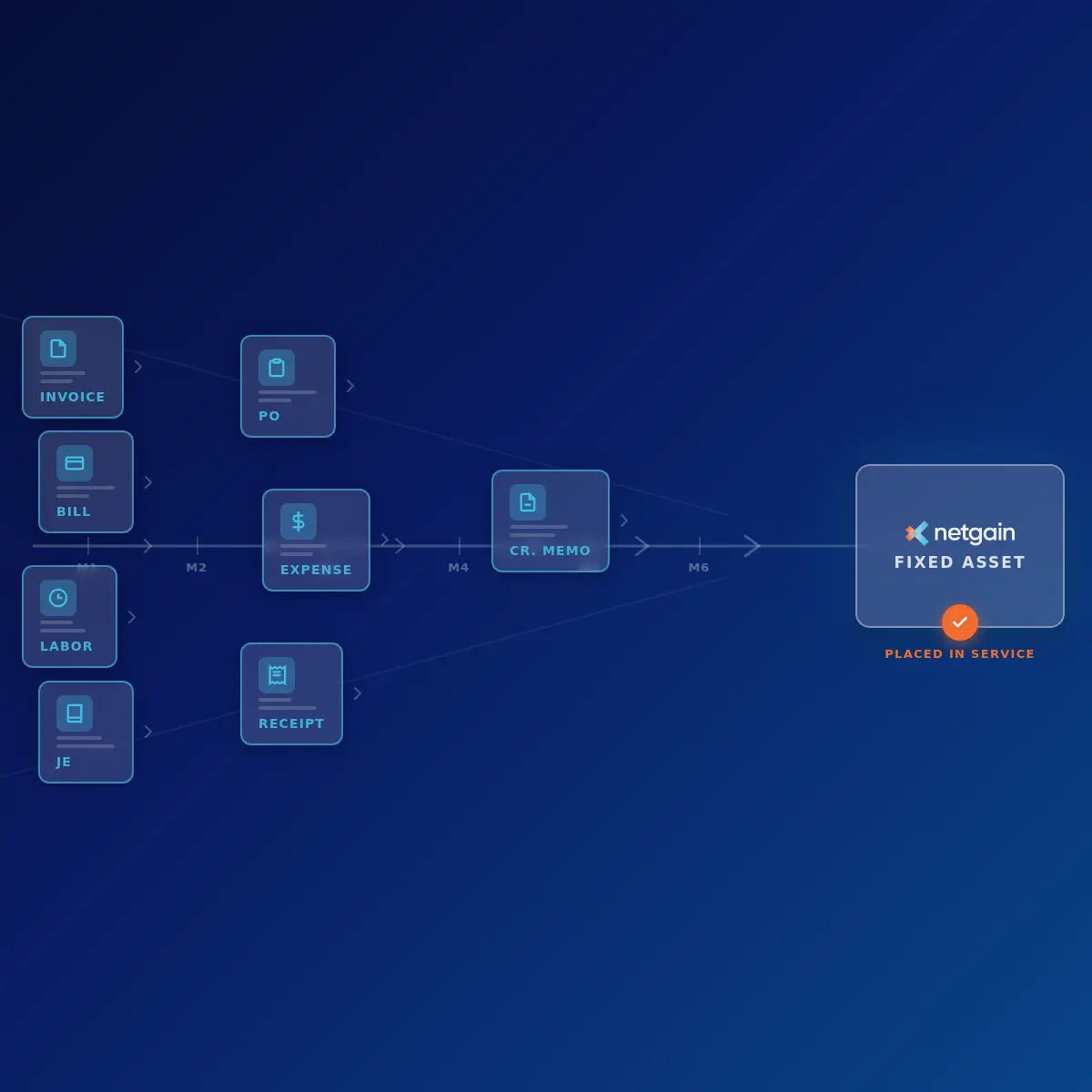
The same logic runs through the rest of the close. NetAsset runs fixed asset depreciation and disposals inside NetSuite, so an assistant asked about a depreciation run reads the posted entry directly. NetClose keeps reconciliations and close tasks in the same system, so the status an assistant reports back is the real one. Shared Transactions handles intercompany allocations natively, so the eliminations tie without an offline work paper to chase. And because clean data is the whole game, Cross-Validation Rules stops bad account combinations from posting in the first place,keeping the source your AI reads trustworthy at the point of entry.
When the specialized accounting lives where the ledger lives, an assistant reporting a lease liability figure reads the number already posted by the tool that calculated it. That is what the best setup delivers:one governed source where every figure is traceable, and an assistant you can put to work at close without wondering where its answers came from.
Where to start
You do not need to solve AI strategy for the whole finance function this quarter. Start with one question: is the specialized accounting that feeds your close already running inside your ERP, where an AI assistant could read it as cleanly as the ledger?
Teams that can answer yes are positioned to turn an AI assistant into saved hours at close. Bringing that accounting into NetSuite is the step that makes the rest possible, and it pays off the day you connect an assistant to a source of truth that already holds every number in one place.
If you are working through what an ERP-native foundation looks like for your team, seeing how it works inside NetSuite is a reasonable place to begin.